Plumbers In Lincoln
Welcome to Plumbmac Services Ltd, specialists in all aspects of domestic and commercial plumbing work throughout Lincoln and the surrounding areas of Lincolnshire. With many years’ experience in the trade, our plumbers in Lincoln offer a wide range of services including general plumbing repairs, central heating installations, boiler maintenance and power flushing services to name a few.
As a family run business, we understand the importance of providing honest and reliable plumbing services to all customers. From repairing a leaking tap to installing an under-floor heating system, all work is completed to the highest standards.
Our Plumbing Services Include:
- Boiler Maintenance / Servicing
- Boiler Repairs / Replacements
- Bathroom Fitting
- Shower Installations
- Landlord Certification
- Under-Floor Heating
- Power Flushing
- Central Heating System Installations
- Central Heating Repairs
- General Plumbing Services
Why Choose Our Plumbers In Lincoln?
At Plumbmac Services Ltd, we take pride in the amount of new plumbing jobs and repeat business acquired through word-of-mouth and customer recommendation. Our plumbers in Lincoln are reliable, polite and fully qualified to undertake all aspects of domestic plumbing work throughout the home.
- 20 Years Serving The Lincolnshire Area
- 100% Qualified Heating Engineers
- Five Star Customer Rated
- Hundreds Of Satisfied Customers
- Fully Insured
Accreditations / Qualifications
Gas Safe Registered
Gas Safe is the official gas registration body for the United Kingdom, replacing CORGI in 2009. All engineers who work on gas appliances, pipework and fittings are legally required to be on the Gas Safe Register. When you hire a Gas Safe registered engineer, you can be confident that the work is being carried out safely, legally and to the strictest standards. You can verify any engineer's registration at any time on the Gas Safe website.
CIPHE Member

The Chartered Institute of Plumbing and Heating Engineering (CIPHE) is the professional body for the UK plumbing and heating industry. Membership of the CIPHE demonstrates a commitment to professionalism, ongoing training and the highest standards of workmanship. When choosing a CIPHE member, you can be assured that your plumber operates to a strict code of conduct and keeps their knowledge and skills fully up to date.
WRAS Approved
WRAS stands for the Water Regulations Advisory Scheme. WRAS approval demonstrates that a plumber has a thorough understanding of the Water Supply (Water Fittings) Regulations 1999, which exist to protect public health and prevent the waste or contamination of water. Hiring a WRAS approved plumber ensures that all water fittings and installations in your home or business comply fully with current UK regulations.
Areas We Cover
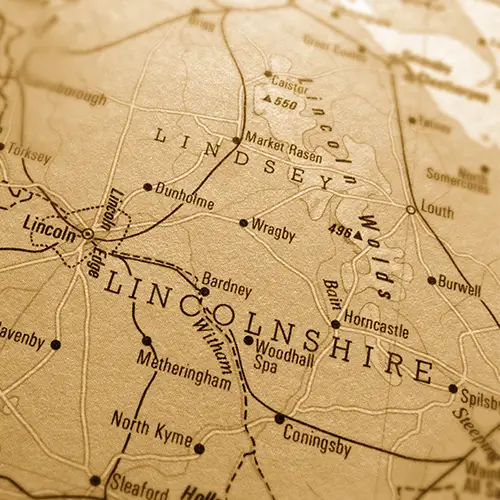
Our plumbers serve customers across the whole of Lincolnshire including (but not limited to) Sleaford, Gainsborough, Grantham, Newark, Market Rasen, Horncastle, Louth, Woodhall Spa, Washingborough, Skellingthorpe and Waddington. Whether you're in the city centre or further afield, we're on hand to help.
Frequently Asked Questions
-
What pressure should my boiler be running at?
For most modern combi and system boilers, the pressure when the heating is off should sit between 1.0 and 1.5 bar on the gauge. When the heating is on, it is normal for this to rise slightly to around 2.0 bar. If the pressure drops below 0.5 bar the system has lost water and will need repressurising. If it rises above 2.5 bar this can indicate a fault with the expansion vessel or pressure relief valve, and a qualified engineer should be called.
-
Why is my radiator hot at the bottom but cold at the top?
This is almost always caused by trapped air in the radiator preventing hot water from circulating properly to the top. The solution is to bleed the radiator using a radiator key, which releases the trapped air. After bleeding, always check your boiler pressure gauge as bleeding can cause a drop in system pressure that will need topping up.
-
What is a power flush and how do I know if my system needs one?
A power flush is a deep cleansing process that pumps water at high velocity through your central heating system to remove built up sludge, rust and debris from inside the pipes, radiators and boiler.
Signs that your system may need a power flush include radiators that take a long time to heat up, cold spots at the bottom of radiators, a noisy boiler or pump, and rooms that are consistently colder than others. A properly carried out power flush should last between five and ten years, provided a corrosion inhibitor is added to the system afterwards. -
Why does my boiler keep losing pressure?
A boiler that repeatedly loses pressure usually indicates one of three things. The most common cause is a small leak somewhere in the system, either in the pipework, radiator valves or the boiler itself. It can also be caused by a faulty expansion vessel that is no longer able to absorb the pressure created when water heats up, or by a pressure relief valve that is releasing water. If your boiler loses pressure more than occasionally, it should be inspected by a Gas Safe registered engineer.
-
What is the difference between a combi boiler, a system boiler and a regular boiler?
A combi boiler heats water on demand directly from the mains, meaning there is no need for a separate hot water cylinder or cold water tank in the loft.
A system boiler works with a hot water cylinder to store heated water but still connects directly to the mains, making it a good choice for homes with multiple bathrooms. A regular boiler, sometimes called a heat only or conventional boiler, requires both a hot water cylinder and a cold water tank in the loft and is typically found in older properties.
The right choice for your home depends on the size of the property, the number of bathrooms and the existing pipework. -
What causes banging or knocking sounds in my pipes?
Banging, knocking or rattling sounds in pipework are commonly referred to as water hammer. This can be caused by trapped air in the system, water pressure that is too high, or loose pipe fittings that move when water flows through them.
A rumbling or popping sound from the boiler itself can indicate limescale buildup inside the heat exchanger, which restricts water flow and causes the water to overheat locally. These sounds should not be ignored as they can indicate issues that will worsen over time if left untreated. -
How often should my boiler be serviced?
A boiler should be serviced by a qualified Gas Safe registered engineer once a year. An annual service includes a visual inspection for leaks or corrosion, a gas pressure check, a flue test to check for harmful emissions, and an inspection of the boiler controls. Regular servicing keeps the boiler running safely and efficiently, can identify small issues before they become costly repairs, and is often a requirement of the boiler manufacturer's warranty.
-
Why is there no hot water even though my heating is working?
On a combi boiler this is often caused by a faulty diverter valve, which is responsible for directing hot water either to the radiators or to the hot water taps. If the valve sticks or fails it can result in heating working normally while hot water to the taps is lost.
On a system with a hot water cylinder it could indicate a failed immersion heater, a faulty thermostat on the cylinder, or an issue with the motorised valve. Our heating engineer will be able to diagnose the fault quickly and advise on the most cost effective solution. -
What causes low water pressure in my home and how can it be fixed?
Low water pressure can be caused by several things including limescale buildup inside pipes, a partially closed stopcock, a leak somewhere in the system, or simply low pressure from the mains supply. If the low pressure affects only one tap it is likely a localised blockage or faulty fitting.
If it affects multiple outlets throughout the property it may point to an issue with the incoming supply or a hidden leak. A plumber can carry out a pressure test to identify the cause and recommend the appropriate course of action.
Free, No Obligation Quotes
After receiving your enquiry, our plumbers will be happy to arrange a free site visit to better understand your requirements and the type of work involved. With a wealth of knowledge in the plumbing industry, our team are on hand to offer valuable advice and answer any questions you may have regarding the work in question. A fully written, no obligation quote will then be provided for your consideration.